Posts Tagged ‘compliance’

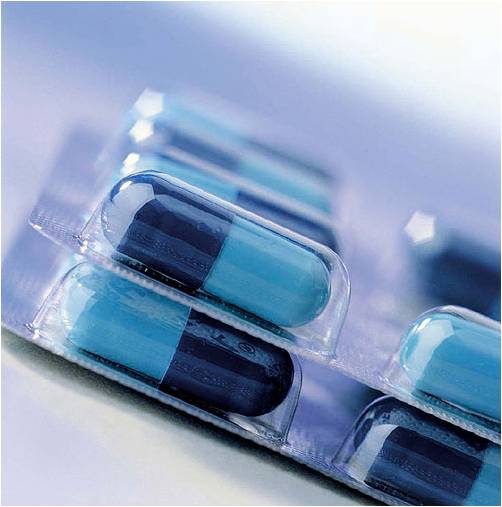
Medical device and packaging convergence

Posted in Design, Healthcare & Pharma, Innovation, Materials, Medical Devices, Technology on March 11th, 2011 by Chris Penfold – 60 Comments

Medical Device & packaging interface is converging

Medical Device & packaging interface is converging

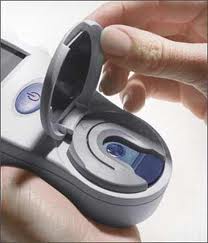
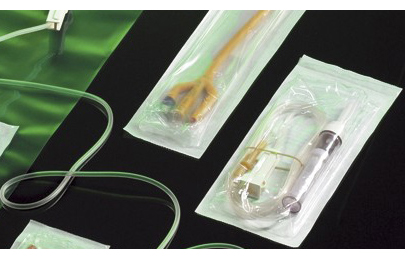
There are an ever-increasing number of ‘medical device’ products coming to market or existing products changing their classification to ‘medical device’ to give greater flexibility in the market. The boundary between Medical Devices and packaging is becoming ever-more blurred as the followng areas converge: smartphone technology, materials technology, internet capabilities & bandwidth, Wi-Fi and Near Field Communications (NFC). This is particularly evident in the area of patient compliance (adherence) and to a lesser extent, also in the areas of anti-counterfeiting and Track & Trace.

The route to CE marking depends on the risk classification of your device and also on how many you manufacture. The development of a device is heavily regulated and various criteria need to have been checked and decisions/design routes justified and recorded.

The Manufacturers or their authorised representative must follow one of several routes in order to CE mark their devices and legally sell or distribute them on the European market.
The Brand owner for the device will also have some of the responsibilities of the manufacturer.

The Team at Design Cognition have been involved in many successful device developments and understand what is required to develop a device/product that will meet the stringent criteria laid down by the various authorities. We can provide support for your project from concept through development, authorisation and commercialisation or even for the reviews. We are here to help, so give us a call!

Chris Penfold

Catalent Pharma to use Digimarc Media Enhanced Packaging™ Solutions globally

Posted in Branding, Design, Healthcare & Pharma, Innovation, Product News, Technology on September 28th, 2010 by Chris Penfold – Be the first to comment
Media Enhanced Packaging Solutions - 'raise the game'

Media Enhanced Packaging Solutions - 'raise the game'

The US-based Digimarc Corporation has recently been working very closely with New Jersey-based Catalent Pharma Solutions, a leading provider of innovative packaging solutions to the pharmaceutical, biotechnology, and consumer healthcare industries to take interactive pharmaceutical packaging to the ‘next level’. It has licensed its mobile visual search software that, together with it’s leading-edge Chroma watermark printing technology, will allow Catalent to deliver new Media Enhanced Packaging solutions to its clients worldwide that will instantly connect consumers to a range of network services from printed packaging, inserts, and labels using smart phones and other digital devices.

Digimarc’s mobile software enables the phone’s camera to “see” digital data that has been embedded into all forms of printed materials, including advertisements, editorial content, brochures, posters, product packaging, labels and more. Unlike 2D barcodes or QR codes, the digital codes do not take up precious space on packages, and they are imperceptible to human senses, but can easily be detected by computers, networks, and today’s most popular smart phones. So they not only open up all sorts of possibilities for more advanced covert counterfeiting measures to be taken, but also for additional patient and Healthcare Practitioner (HCP) information, advice and interaction.

You can read a more information at www.digimarc.com and www.catalent.com

We are really passionate about helping our clients identify and implement new and exciting technologies so why not give us a call now and see how we can help you – +44(0)115 8461914

You can find other related Design Cognition articles on ‘Intelligent’ packaging & technology here:

Design Cognition Technology Insights & News

Chris Penfold

Pharmaceutical packaging? don’t know? want to know? need to know?

Posted in Design Cognition News, Events, Healthcare & Pharma, Materials, Safety, Training, Uncategorized on August 4th, 2010 by Chris Penfold – Be the first to comment
Pharmaceutical packaging requirements can be a minefield

Pharmaceutical packaging requirements can be a minefield

Do you work in the pharmaceutical industry on the ‘periphery’ of packaging, working for example in Marketing, Purchasing, Design or QA etc , and have always wanted to find out more about packaging, but without having to attend a lengthy 3 day training course? Or perhaps you are a Packaging Technologist working on toiletries or cosmetics and want to gain a better understanding pharma issues and opportunities?

If so, then this ONE DAY TRAINING COURSE could be for you!

It’s being held on 14th October 2010 in Nottingham, UK

Pharmaceutical packaging is a very specialised area with its own unique issues & problems. This one day course will provide delegates with a good basic grounding & appreciation of what is required for the packaging of pharmaceutical & healthcare products. Whether you know nothing, have a basic understanding or are familiar with the area, this course will provide you with useful knowledge and insights from experts who have each worked in the industry for over 25 years.

What will be covered:

1.Packaging component & material selection Key product requirements (Consumer, Barrier, Shelf Life & Regulatory – Child resistance, Tamper evidence, Dosing & Stability. Marketing expectations.

2. Key properties of various materials / systems Main barriers & benefits of various packaging materials, Key drivers for pack performance, Supply chain implications on the packs

3. Pack testing & evaluation Mandatory requirements for Consumer testing & Transit testing.

4. Packaging component specifications Key requirements for a specification, Control of the documents.

5. Artwork generation & control Establishing processes suitable to your business needs – Wording & Templates, Creation, Version control & authorisation.

6.Regulatory requirements Packaging data for the MA , Braille, barcodes, Child Resistance, Tamper Evidence, Readability & others – including emerging requirements (e.g. 2D data matrix barcodes). Key packaging data for the MA/Dossier (Specifications & data, Supplier details). Key requirements for Braille etc.

7. Transit packaging Considerations of risk, Establishing test programmes, Specific requirements for palletisation etc.

8. Trade /supply chain requirements Understanding the various markets & their particular requirements, Understanding trade requirements (e.g. Barcodes, Shelf Ready Trays etc).

A full set of documentation will be provided.

You can find out more and register for this event by clicking: More information on Packaging of Pharmaceuticals – a One Day Introductory Course 14th October 2010

Chris Penfold
Building competitive advantage through packaging training & coaching

Posted in Design Cognition News, Events, Healthcare & Pharma, Opinion, Product News, Training, Uncategorized on August 2nd, 2010 by Chris Penfold – Be the first to comment
As your training partners Design Cognition can provide all of your packaging-related training needs

As your training partners Design Cognition can provide all of your packaging-related training needs

We believe that the old adage that ‘your people are your most important asset’ is true. It’s fundamental that key members of staff keep pace with new technologies, best-practice processes and the continually evolving packaging regulations and standards – not an easy task for busy professionals, is it?

Additionally, it’s essential to keep a teams’ skills ‘honed’ to make sure that they are well-informed in order to help maintain competitive edge.

With that in mind, at Design Cognition, we have created a range of friendly, easy-to-learn and access courses to help you in two important areas:

1. Knowledge

To help you develop your own knowledge and experience, so that you are equipped to make better and more informed decisions.

2. Skills

To help you apply the information provided and learn through your own insights and experience.

The training sessions will be fairly interactive, providing plenty of opportunities for you to bring your current packaging problems along for review and discussion by the tutor, in confidence if necessary.

We guarantee to engage your interest and commitment on the courses and are confident our training will improve your effectiveness at work. In addition, you’ll receive a full set of course notes in a comprehensive ‘takeaway’ package for future reference.

We also encourage you to let us know what you think. We are always able to consider running a bespoke course for you, if that would suit you better, and most courses are available as in-house training programmes at your own premises.

You can find out more about our training events at: Design Cognition training programme

We have put together a range of courses, from areas as diverse as creative and technical disciplines and from processes ranging from artwork generation to cost-optimisation. Some of our initial topics include:

Pharmaceutical packaging, Branding and shelf impact, Introduction to packaging for non-packaging professionals, 2D Data Matrix barcodes, Braille and Sustainability.

Further information and dates will follow on our ‘Training’ page and we are continually adding to these events, so please pop back often to review additions, or ask to join our training mailing list (email: training@designcognition.com) or call +44 (0)115 846 1914.

Chris Penfold

Medical packaging & devices go greener

Posted in Design, Environmental Issues, Government, Healthcare & Pharma, Materials, Recycling, cost-optimisation on July 15th, 2010 by Chris Penfold – Be the first to comment
Medical device packaging

Medical device packaging

Traditionally medical products, devices and their related packaging has been ’sidelined’ in much of the debate around the environment, where the major focus has been on retail products. However, it is estimated (Mulligan) that medical packaging contributes between 30% to 50% (or more) of the medical waste stream. There is a lot of work going on in the background, within the National Health Service (NHS) in the UK, and further afield globally, as healthcare practitioners are put under increasing pressure to ‘go green’, become more ’sustainable’ and reduce their ‘carbon footprint’.  These initiatives go right to the core of their infrastructure, looking at everything from operating theatre furniture and equipment, through to medical devices and all related packaging.

However, there are wider ramifications, as it apparent that these sustainability initiatives will also enable huge cost benefits, improved regulatory compliance, and enhanced corporate social responsibility (CSR) when done correctly. So no pressure then ;-) !

On the face of it, this looks like a huge and daunting task, but with the aid of modern modelling techniques, such as those used by Walmart and by Marks & Spencer (M&S) in their ‘Plan A’, data and issues can be quite easily ‘chunked-down’ into manageable bite-size segments. This can help prioritisation and enable ‘quick wins’ on the highest ‘value creating’ initiatives.

It is important that suppliers and medical device manufacturers think about these sweeping changes and, if not already doing so, start to design and develop medical devices & healthcare packaging to meet these more stringent requirements. Next-generation packaging must be: 1) easy to manufacture; 2) meet stringent regulatory requirements; 3) meet the needs of distributors, healthcare institutions, and medical practitioners; and 4) minimize impact on the environment.

Mulligan talks in greater detail about all of this in an interesting article ‘Using a Life Cycle Analysis approach in medical packaging‘ recently published on the Healthcare Packaging website. Have a read and let us know what you think!

Chris Penfold

Universal standards for prescription medication labels

Posted in Healthcare & Pharma, Safety on May 12th, 2010 by Jane Bear – Be the first to comment

Looks like the US are now implementing their version of readability requirements currently in place in the UK/EU.

The recommended 12 point font size for critical information is going to be challenging. (Annie Dallison)

To read the full article just follow the link to PMPNews

So you thought implementation of Braille packaging standards was easy?

Posted in Healthcare & Pharma, Legal, Opinion on January 19th, 2010 by Jane Bear – Be the first to comment

The development of both the BSI & CEN standards for Braille on Pharmaceutical Packaging have taken years of dedication from the Working Groups with clear commendation coming from the RNIB for the support they have received from the Packaging Industry.

The following article provides an interesting insight into the issues encountered from the RNIB perspective. It clearly demonstrates the amount of work and angst that has taken place over the past few years to make this happen and reach this breakthrough milestone. Three years ago many people thought that this initiative would never happen. It demonstrates what can be achieved by a common focus and working as a team to overcome all of the hurdles and we at Design Cognition Ltd (DCL) are proud to have been involved in these Working Groups at ‘the cutting edge’ and having been personally involved myself, wish to offer my thanks to all involved for their support and mutual respect.

 As I’m sure you will appreciate, to implement successful Braille packaging solutions for the client there is a lot of work involved from a technical & aesthetic point of view, requiring much ‘horse-trading’ to ensure that the needs of all stakeholders are met. Luckily at DCL we have the skills to understand & empathise with these juxtaposed issues and for many of our clients have delivered Braille solutions inclusive of artworks in a timely, efficient and sympathetic manner that delighted them. If you’d like any further information on Braille or ‘hands on’ help from people that have practical experience and have been through the loop, check out: www.thepharmagateway.com/about and get in touch. (Anne Dallison)

 braille on a pack
The needs of partially sighted and blind people are being heard. By October 2010, the majority of secondary medicinal packaging in the EU is set to become more accessible by accommodating braille. Getting the process right, however, has taken six long years. Rupal Mehta investigates.  Read the full Packaging Professional article here http://ow.ly/XMmo

Healthcare Packaging – December 2009 : ANTI-COUNTERFEITING: WHEN PACKAGING AND LABELING HELP FIGHT DRUG COUNTERFEITS

Posted in Healthcare & Pharma, Innovation, Legal, Safety, Technology on January 7th, 2010 by Anne Dallison – Be the first to comment

PACKAGING AND LABELING HELP FIGHT DRUG COUNTERFEITS

In the U.S.Food and Drug Administration’s ongoing battle against counterfeit drug products, the latest FDA guidance is aimed directly at packaging techniques.In a July guidance document to industry, the FDA set forth some suggestions for incorporating so called “physical-chemical identifiers” PCIDs into solid oral dosageform drug products and paid particular attention to those that might migrate from packaging or container labeling.The FDA defines a PCID as a product with some unique physical and or chemical characteristic that is added to the dosage form of a drug product and which “makes it possible to detect and authenticate legitimate dosage forms and identify counterfeits.”These so-called PCIDs can include inks, pigments, flavors, or molecular taggants, says the FDA. And the agency expects that many of them would be made of existing substances used in food additives, colorants, or drug products’ excipients.The FDA’s guidance document, entitled “Incorporation of Physical-Chemical Identifiers Into Solid Oral Dosage Form Drug Products For Anticounterfeiting,” is primarily concerned with helping drug makers and applicants for new drug approvals incorporate relevant information about their PCIDs into new drug applications, supplemental applications, and annual reports submitted to the FDA.The guidance does not attempt to address radio frequency identification RFID.Counterfeits have tended to be a bigger problem overseas than in the U.S., though it is a concern here, and not just when drugs are imported. The FDA has always recognized the importance of packaging technologies as potential solutions, including but not limited to RFID.Confirming the authenticity of any individual package of drugs, or, when possible, even an individual dosage, is the essence of thwarting counterfeits. In the complex distribution network through which drug products travel, opportunities abound to introduce counterfeit product into the mix.Counterfeits can come in many forms. For example, they might be products that are just imitations, and literally lack the right ingredients, or are out-of-date versions of the real thing, or are otherwise diverted from the ordinary authorized distribution pathways. It is a recognized phenomenon that authentic and appropriate products are often mixed with inauthentic counterfeits, meaning the confirmation of authenticity often involves measures going to the individual dosage level. Hence, ideas like PCIDs.As for PCIDs that are added to packaging or labeling of drug products in solid oral dosage form, the FDA makes specific recommendations on how to evaluate toxicological concerns and offers guidance on when and how to report or request approval of the addition of a PCID. The agency points out that, as expected, its “toxicological concerns are mitigated if the added substances is a permitted direct or indirect food additive,” or listed in the FDA’s Inactive Ingredient Guide.If the substance you want to use as a PCID in packaging is not the subject of known toxicological information, the packager should, says the FDA, determine that there won’t be migration of the substance into the products. If some interaction of the PCID with the product is expected, and toxicological concerns may result, the FDA suggests packagers contact the agency to discuss the issues. If the toxicology of the substance hasn’t been established, and the potential for its migration exists, the FDA says the drug product with that PCID in it would require a prior approval supplement before marketing.When it comes to PCIDs in solid oral dosage-form products, the FDA is hoping to help industry follow one of its key pieces of advice: Use a multifaceted approach to counterfeiting in order to stay at least one step ahead of counterfeiters.

via Healthcare Packaging – December 2009 : ANTI-COUNTERFEITING: WHEN PACKAGING AND LABELING HELP FIGHT DRUG COUNTERFEITS.

Patient Compliance – The Achilles Heel of Healthcare – Technology Breakthrough

Posted in Design, Design Cognition News, Healthcare & Pharma, Innovation, Materials, Opinion, Product News, Technology, Uncategorized on December 18th, 2009 by Chris Penfold – Be the first to comment

Below is a really interesting technological packaging advancement that is truly exciting and could have major benefits in the healthcare and pharma packaging & clinical trials sectors. Design Cognition also believe that this technology has further application in other dosage forms and sectors and is working with DSM TCG & GP Solutions (UK) Ltd to develop the OtCM™ and Dose Guard™ technologies in innovative ways to meet the demands of end-users and industry and bring this product to market in a viable & cost-effective manner.

Please contact me (chris@designcognition.com) if you’d like more information or come and visit us at Packaging Innovations at the NEC, Birmingham UK on 24th or 25th Feb (stand 582), where we can discuss in more detail. You can register HERE.  Chris Penfold

When was the last time you forgot to take your medication? Odds are that it was within the last week. This makes you part of the millions of patients who don’t take their medications as prescribed by their physician. Medication non-adherence, or mal-compliance, as it is commonly called, is a problem that disrupts the healthcare system in many ways. If you don’t take your medication odds are that you won’t get the full benefit of the treatment. As former US surgeon general Dr. C. Everett Koop said, “Drugs don’t work in people who don’t take them”. In the worst case, you could be among the patient population who are hospitalized as a result medication non-adherence. The cost to the healthcare system? Phenomenal! Mortality count? Sinister! Morbidity rates? Unacceptable!

At its root, this problem, like many, is a problem of human behaviour. Even Hippocrates (460-377 BC), the “Godfather of Medicine”, gave early warnings of the non-compliance issues to his students and colleagues. (”Keep watch for that fault in patients which makes them lie about the taking of things prescribed.”). Even though we are “creatures of habit”, we often lose momentum when taking medications, especially for chronic conditions.

The Non-Compliance Money Waste List

The Non-Compliance Money Waste List

There have been several attempts at using technology to influence compliance rates. As one scans the Web looking for potential help, some solutions that arise include:   (1) A variety of medication reminders that will beep, blip or blurt when it is time to take your medication. (2) A variety of devices that can track the number of times a medication dosage has been removed from a medication pack or a medication container (USA) that has been opened. The data collected can be downloaded at the doctor’s office or pharmacy to check compliance statistics. (3) A variety of devices that can remind the patient to take their medications and confirm that they have taken it by pressing a button to send the data.  (4) A miscellaneous group of reminder devices with alarms, like automated pill boxes or wrist watches.

OtCM™ -  Objective therapy Compliance Measurement.

One of the weaknesses of these approaches is that one can never guarantee that the patients have taken their medicine after an alarm. In fact, one can’t detect if the medication unit dosage has been taken, or if the medication unit dosage has even been taken at the right time.

A new technology has arrived that has the potential to dramatically impact the therapy compliance rates for individuals, particularly seniors, as they go about their daily lives. The name of this technology is OtCM™, Objective therapy Compliance Measurement, using the most recent RFID/NFC (Radio Frequency Identification, Near Field Communication) technology, including embedded sensor functionalities, and combined with printed organic electronics.  The OtCM™ application was invented by Jos Geboers and Willem Kort, who are working in the healthcare industry, especially in clinical pharmaceutical R&D, Health Economics, Outcomes Research and Patient Recorded Outcomes.  To that purpose Messrs. Geboers and Kort initiated the foundation of a consortium that includes all players, i.e. top listed pharmaceutical companies, medication packagers, health insurers and Royal DSM N.V.: “The Compliers Group” (DSM TCG).  DSM TCG wanted a way to be as certain as possible that patients were taking their medications at the correct frequency each day. They knew that, whatever solution they decided on, it needed to be “real time” since any delays in therapy could have serious health consequences. A novel system for measuring the time and quantity of drugs taken out of conventional, existing medication packaging or medication container, is used.  “Leading” versus “Bleeding” edge …

The existing medication package will do …

The system consists of conventional, existing medication blister pack (or “bottle”) of a given prescription drug furnished with “organic electronics” (circuitry, power supply), i.e. functional polymers and coatings, to print “the micromechatronic blister/bottle”. A “traditional” silicon RFID/NFC IC (Integrated Circuit) that has been especially designed for OtCM™ with integrated interfaces for i.e. clock and temperature functionality, provide the intelligence to identify data (date-time) of pills/capsules that have been taken out of the blister pack/bottle, whilst wireless Radio Frequency (RF) techniques (NFC, Near Field Communication) are able to transfer data wirelessly from the “OtCM™ enabled blister/bottle” onto DSM TCG’s webserver.

Driven by the intelligence of the RFID chip, embedded in the “mechatronic circuitry”, and the printed power supply (capacitator, battery), an electric current is circulating through the circuitry of the packaging at regular time intervals. As soon as a dosage is removed out of the packaging, the chip is activated. This information is stored. When in close proximity of a (NFC) reader,  the recorded information in the packaging will be transferred and stored in the server to populate the Therapy Compliance Database of active patients, under all regulatory recommended & required security and privacy conditions, locally and globally.

The standard existing medication blister package will do at a fraction of the traditional costs!

The concept of using the technology of printing functional polymers and coatings is an innovative approach. A large variety of  applications in real-life situations has been brought about, especially for purposes of identification of products and, consequently, the packaging of products.  The standard medication blister package will do at a fraction of the traditional costs!   Moreover, until now, traditionally available therapy compliance devices are extremely costly, even if mass-produced. Mass produced RFID-tags combined with polymer printing will introduce low-pricing schedules, based on factors of 90-95% reduction vs. currently available “traditional electronic” OCM devices, i.e. pill boxes or so-called “smart pill boxes”.

DSM TCG’s OtCM™ technology can be combined with GP Solutions (UK) Ltd’s patented and approved Dose Guard™ solution; a child resistant senior friendly secondary barrier that when applied to a blister pack will render it safe for use. Both “come with the standard, existing medication package”.  From surveys it has been identified that patients and health practitioners (physicians, medical specialists, pharmacists) only appreciate the enabling of OtCM™ right from the medication packaging. There obviously is no need for an additional, “stand-alone” therapy compliance measurement (recording) device separated from the medication package.

During OtCM™ we measure through the standard medication packaging:

(1) when the pill/capsule is taken,

(2) the location of the removed pill/capsule onto the blister packaging,

(3) the correct dosing schedule,

(4) an acoustic signal might prompt the for action,  data re: expiration date,

(5) production information re: temperature, batch IDs from the production line,  drug interaction alerts.

This real-time “interventional approach” is what stands apart from other compliance solutions.  In conclusion, it is clear that there are several technological approaches that are aimed squarely at the problem of medication compliance. Though these advances give our “inner geek” some encouragement, they are ultimately targeted at making sure that at-risk populations stay on track as they take medications to improve their health status. David Rosa, Willem Kort

You can find further information on compliance and evolving technologies, via Design Cognition’s sister site The Pharma Gateway‘. Also, if you are interested in our forthcoming compliance workshops – let us know.

Contact Chris Penfold (chris@designcognition.com).