Healthcare & Pharma

Pharmaceutical packaging? don’t know? want to know? need to know?

Posted in Design Cognition News, Events, Healthcare & Pharma, Materials, Safety, Training, Uncategorized on August 4th, 2010 by Chris Penfold – Be the first to comment
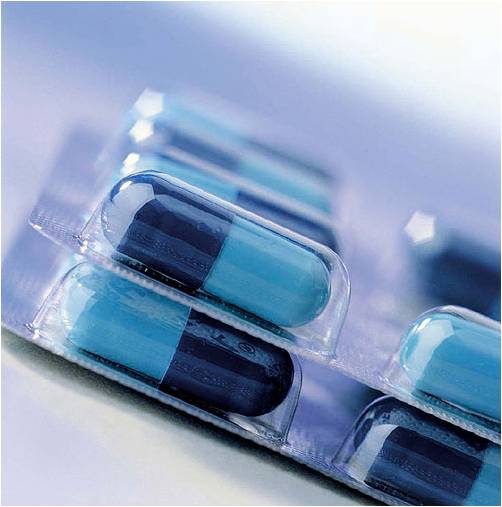
Pharmaceutical packaging requirements can be a minefield

Pharmaceutical packaging requirements can be a minefield

Do you work in the pharmaceutical industry on the ‘periphery’ of packaging, working for example in Marketing, Purchasing, Design or QA etc , and have always wanted to find out more about packaging, but without having to attend a lengthy 3 day training course? Or perhaps you are a Packaging Technologist working on toiletries or cosmetics and want to gain a better understanding pharma issues and opportunities?

If so, then this ONE DAY TRAINING COURSE could be for you!

It’s being held on 14th October 2010 in Nottingham, UK

Pharmaceutical packaging is a very specialised area with its own unique issues & problems. This one day course will provide delegates with a good basic grounding & appreciation of what is required for the packaging of pharmaceutical & healthcare products. Whether you know nothing, have a basic understanding or are familiar with the area, this course will provide you with useful knowledge and insights from experts who have each worked in the industry for over 25 years.

What will be covered:

1.Packaging component & material selection Key product requirements (Consumer, Barrier, Shelf Life & Regulatory – Child resistance, Tamper evidence, Dosing & Stability. Marketing expectations.

2. Key properties of various materials / systems Main barriers & benefits of various packaging materials, Key drivers for pack performance, Supply chain implications on the packs

3. Pack testing & evaluation Mandatory requirements for Consumer testing & Transit testing.

4. Packaging component specifications Key requirements for a specification, Control of the documents.

5. Artwork generation & control Establishing processes suitable to your business needs – Wording & Templates, Creation, Version control & authorisation.

6.Regulatory requirements Packaging data for the MA , Braille, barcodes, Child Resistance, Tamper Evidence, Readability & others – including emerging requirements (e.g. 2D data matrix barcodes). Key packaging data for the MA/Dossier (Specifications & data, Supplier details). Key requirements for Braille etc.

7. Transit packaging Considerations of risk, Establishing test programmes, Specific requirements for palletisation etc.

8. Trade /supply chain requirements Understanding the various markets & their particular requirements, Understanding trade requirements (e.g. Barcodes, Shelf Ready Trays etc).

A full set of documentation will be provided.

You can find out more and register for this event by clicking: More information on Packaging of Pharmaceuticals – a One Day Introductory Course 14th October 2010

Chris Penfold

Building competitive advantage through packaging training & coaching

Posted in Design Cognition News, Events, Healthcare & Pharma, Opinion, Product News, Training, Uncategorized on August 2nd, 2010 by Chris Penfold – Be the first to comment
As your training partners Design Cognition can provide all of your packaging-related training needs

As your training partners Design Cognition can provide all of your packaging-related training needs

We believe that the old adage that ‘your people are your most important asset’ is true. It’s fundamental that key members of staff keep pace with new technologies, best-practice processes and the continually evolving packaging regulations and standards – not an easy task for busy professionals, is it?

Additionally, it’s essential to keep a teams’ skills ‘honed’ to make sure that they are well-informed in order to help maintain competitive edge.

With that in mind, at Design Cognition, we have created a range of friendly, easy-to-learn and access courses to help you in two important areas:

1. Knowledge

To help you develop your own knowledge and experience, so that you are equipped to make better and more informed decisions.

2. Skills

To help you apply the information provided and learn through your own insights and experience.

The training sessions will be fairly interactive, providing plenty of opportunities for you to bring your current packaging problems along for review and discussion by the tutor, in confidence if necessary.

We guarantee to engage your interest and commitment on the courses and are confident our training will improve your effectiveness at work. In addition, you’ll receive a full set of course notes in a comprehensive ‘takeaway’ package for future reference.

We also encourage you to let us know what you think. We are always able to consider running a bespoke course for you, if that would suit you better, and most courses are available as in-house training programmes at your own premises.

You can find out more about our training events at: Design Cognition training programme

We have put together a range of courses, from areas as diverse as creative and technical disciplines and from processes ranging from artwork generation to cost-optimisation. Some of our initial topics include:

Pharmaceutical packaging, Branding and shelf impact, Introduction to packaging for non-packaging professionals, 2D Data Matrix barcodes, Braille and Sustainability.

Further information and dates will follow on our ‘Training’ page and we are continually adding to these events, so please pop back often to review additions, or ask to join our training mailing list (email: training@designcognition.com) or call +44 (0)115 846 1914.

Chris Penfold

Medical packaging & devices go greener

Posted in Design, Environmental Issues, Government, Healthcare & Pharma, Materials, Recycling, cost-optimisation on July 15th, 2010 by Chris Penfold – Be the first to comment
Medical device packaging

Medical device packaging

Traditionally medical products, devices and their related packaging has been ’sidelined’ in much of the debate around the environment, where the major focus has been on retail products. However, it is estimated (Mulligan) that medical packaging contributes between 30% to 50% (or more) of the medical waste stream. There is a lot of work going on in the background, within the National Health Service (NHS) in the UK, and further afield globally, as healthcare practitioners are put under increasing pressure to ‘go green’, become more ’sustainable’ and reduce their ‘carbon footprint’.  These initiatives go right to the core of their infrastructure, looking at everything from operating theatre furniture and equipment, through to medical devices and all related packaging.

However, there are wider ramifications, as it apparent that these sustainability initiatives will also enable huge cost benefits, improved regulatory compliance, and enhanced corporate social responsibility (CSR) when done correctly. So no pressure then ;-) !

On the face of it, this looks like a huge and daunting task, but with the aid of modern modelling techniques, such as those used by Walmart and by Marks & Spencer (M&S) in their ‘Plan A’, data and issues can be quite easily ‘chunked-down’ into manageable bite-size segments. This can help prioritisation and enable ‘quick wins’ on the highest ‘value creating’ initiatives.

It is important that suppliers and medical device manufacturers think about these sweeping changes and, if not already doing so, start to design and develop medical devices & healthcare packaging to meet these more stringent requirements. Next-generation packaging must be: 1) easy to manufacture; 2) meet stringent regulatory requirements; 3) meet the needs of distributors, healthcare institutions, and medical practitioners; and 4) minimize impact on the environment.

Mulligan talks in greater detail about all of this in an interesting article ‘Using a Life Cycle Analysis approach in medical packaging‘ recently published on the Healthcare Packaging website. Have a read and let us know what you think!

Chris Penfold

New Child Resistant Spray Pack

Posted in Healthcare & Pharma, Innovation on July 13th, 2010 by Jane Bear – Be the first to comment

CAJ child resistant spray packGreat looking new child resistant spray pack from Cope Allman Jaycare.

The opening procedures are based on a squeeze and turn principal.  However, unlike traditional CR closures where the cap is squeezed, the operation has been transferred to the collar component.  This adds to the security and also minimises the risk of children using their teeth to open the pack.  The closure system is intentionally allowed to rotate on the container in order to help prevent the product from being forced open.  Instead of a thread-form, the closure utilises a bayonet type fit to simplify the re-closure operation

For more information just follow this link to webpackagings Cope Allman Jaycare’s page 

Do You Know A Healthcare Professional Who’d Like To Take Part?

Posted in Healthcare & Pharma on July 13th, 2010 by Jane Bear – Be the first to comment

3M are running a competition to identify ‘innovative infection prevention’ practices. 

Debra Rectenwald, president and general manager of 3M’s Infection Prevention Division says ‘The contest will identify innovative approaches to address a wide variety of challenges, and also serve as an educational tool in the fight against rising infection rates’. 

The video receiving the most votes during the public voting phase will recieive a $5,000 educational grant and an expense-paid trip to 3M to meet with the Infection Prevention Division and tour it’s Innovation Center. 

Closing date for uploading your videos to youtube is 13th September 2010, so don’t hang around just follow this link to view the full details on the 3M web site

Healthcare compliance taken to a new level with aid of Facebook

Posted in Healthcare & Pharma, Marketing, Social Media, Technology on June 16th, 2010 by Chris Penfold – Be the first to comment
New Healthseeker game on Facebook

New Healthseeker game on Facebook

A new game called HealthSeeker has been launched  to more than 400 million active users of Facebook, with the goal of helping adults with specific lifestyle and nutritional challenges. The benefits of the game are actually available to anyone, but HealthSeeker specifically helps people with diabetes make more informed lifestyle decisions in an innovative way that complements their daily use of social media. Leading experts have reiterated how important a source of support, information and inspiration social networking tools like this can be for someone living with a chronic condition like diabetes. Many diabetics struggle with the lifestyle changes that are needed to help manage their condition, such as adding more fibre, fruit and vegetables to their diets, or increasing their daily activity. HealthSeeker can help them stay motivated by presenting simple, everyday steps to help them achieve their lifestyle goals.

So the game really takes ‘healthcare compliance’, and social media for that matter, to a completely new level.  Chris Penfold

Read the full article at Pharmaceutical & Medical Packaging News

Something For The Weekend Sir?

Posted in Healthcare & Pharma, Innovation, Materials on June 4th, 2010 by Jane Bear – Be the first to comment

Interactive Durex Condom PackIs this the future of condom packaging?  It’s very gimmicky, but could well appeal to the younger market.

I believe this is only an idea, but it shows what can be done with a bit of imagination.  Why not spend a few minutes on this sunny afternoon contemplating where else you could use this kind of packaging – I’m sure you could have some fun. (Jane Bear)

To view the short video of this pack in action just follow the link to YouTube

Would you like to get your hands on some EC funding to help develop & commercialise your packaging ideas?

Posted in Business News, Design, Design Cognition News, Environmental Issues, Healthcare & Pharma, Innovation, Materials, Technology on May 21st, 2010 by Chris Penfold – Be the first to comment
EC Packaging Project Funding available

EC Packaging Project Funding available

Later this year (July) it is expected that the EC will publish a call for proposals to support the packaging industry to find new ways of adding value to its products. Large companies (>250 employees) can receive a grant of 50% towards their costs whilst SMEs can receive grants up to 75%.  The European Commission is looking for proposals that produce packaging concepts exhibiting the following properties:

· superb barrier properties in terms of durability and protection capabilities utilizing e.g. nanocoatings or thin films for enhancing consumer safety and to extend the shelf life of packaged, perishable goods;

· smart features incorporating nanotechnology such as indicators, sensors, protection against counterfeit and tampering, product traceability indicators, interactive components or biometric components which can be added to packaging  using low cost printing technologies, such as roll-to-roll printing;

· utilisation of materials derived from a sustainable and renewable source, recyclability or biodegradability, and the applicability of resource-efficient (material, energy, water) package production processes.

Maybe you are part of a large corporation that has identified some opportunities but don’t have the finance or resource to take them forward  (e.g. a sustainability or technology project that has the potential to ‘add value’)
or on the other hand, you could be part of an academic institution, Knowledge Transfer Network or SME who has a technology that is looking for a ‘home’.

Either way – I am looking for opportunities to help match you up, build a ‘value case’ and try and get our hands on some of this funding. So if you are interested – please get in touch: enquiries@designcognition.com (putting ‘EC Funding’ in the title)

Chris Penfold

High street packaging dreams – end in ‘the den’

Posted in Branding, Business News, Design, Drinks Packaging, Food Packaging, Healthcare & Pharma, Marketing, Opinion, Product News, Retailers on May 19th, 2010 by Chris Penfold – 2 Comments
Den Kit packaging branding

Den Kit packaging branding

Monday night saw the 2nd programme in the mini series High Street Dreams (8 programmes) on BBC1. The ‘reality TV show’ about product branding, packaging & design development. Over the series Jo Malone and Nick Leslau will help a number of individuals as they try to launch new products. From a packaging and design perspective, I don’t think that this week’s show was as good & fulfilling as the first, but still entertaining. The ‘guinea pigs’ included:

Primary school teachers from Shropshire – Jo Jones & Kay Miller who developed a ‘Den Kit’ – a fun and adventure product to help kids play & learn the old fashioned way! Good old ‘home farm’ values and fun!

Initially chopping trees down themselves in rural Shropshire to make ‘handmade’ wooden mallets, they proposed a huge retail price of  £40 per pack. However after visiting the annual Toy Fair where the average toy price was £6.70, they were forced to reconsider. Their mentor David Strang, an entrepreneur & leading toy manufacturer, emphasised the importance of  ‘eye catching’ packaging (good to hear!) which helped his own products increase sales by a factor of 25!

The ladies took this ‘on board’ and a “top graphic designer” was brought in to develop the branding, but I must say it left me disappointed. Although the typography was strong, with an ‘all over’ camouflage effect. Not sure that it had enough ’shelf stand-out, without any alluring photography or a means to view the products inside. But we didn’t have the benefit of a proper evaluation of competitor packs and ’sight’ of all packs on shelf together. Certainly if it had been our project we would have also considered other packaging options (rather than standard carton) to try and incorporate the above factors and try and add more consumer appeal, convenience & value.

The ladies did manage to get their costs down substantially by sourcing components from a brother in the Philippines. Enabling a revised price point of just under £30.

They christened their overarching brand as ‘Real Adventure’ & pitched to the MD Duncan Grant of the ‘Entertainer’ retail chain who was certainly ‘wavering’ and undecided on whether or not to stock the product. He loved the ‘down to earth’ product concept and I think that most of his concern was targeted at the packaging. He mentioned that the packaging  needed “more work” but did eventually give the ‘ go-ahead’ to try out the products in his 52 high street stores in the UK.

The revised Den Kit packaging

The revised Den Kit packaging

The kit contains: tarpaulin, groundsheet, handmade mallet, tent pegs, tent peg bag, 10m rope, metal mug, camouflage paint, webbing haversack & instructions

Since filming, Jo & Kay have certainly been busy and now have other products featured on their website which you can see here: Flibberty

You can follow them on Twitter: @DenKit

The second product featured on the programme was Nutriyum. Husband and wife, Paul and Maria Stricker quit their lucrative city jobs and invested their life savings (over £15K) to create Nutriyum – a healthy drink for young kids. Developing a drink that is both nutritious and tasty is tough enough, but they had just eight weeks to formulate a product in order to secure themselves a place on the highly competitive supermarket shelves. They enlisted the expertise of Ella’s Kitchen founder Paul Lindley and Little Dish’s Hillary Graves to help them focus, but sadly time was against them and despite bags of enthusiasm,  had failed to do their homework!!

The initial products offered by Paul & Maria were banana & strawberry flavours – but containing no fruit! The product was redeveloped within a matter of days from the previous synthetic mix into a chilled fresh fruit smoothie, which the couple were expecting to sell at the premium price of £1. Leslau affirmed the importance of pitching with a real product – NOT a prototype – something that we would strongly endorse. In our experience, retailers, buyers & marketers often find it difficult to visualise the ‘final product’, so it’s critical to get as close as possible with your product & packaging in any ’sales pitch’. Something that can be achieved quite easily these days with the ability to provide quick-turnaround physical mock-ups & realistic digitally printed artwork.

Leslau also emphasised the importance of gaining ’shelf space’ with retailers. I would also mention that stores sometimes measure profits in terms of the profit per length of shelving – which needs to be borne in mind in any pack design! Retailers need to be able to:

  • Restrict their investment to the lines that will sell
  • Buy in small quantities (keeping minimum stock)
  • Buy goods that generate the highest levels of profit

Indeed we would emphasise the importance of meeting the business needs of all supply chain parties – suppliers, manufacturers, wholesalers, retailers & customers – all are interdependent.

Manufacturing was shown in more detail this week, as the young couple hired contract filling facilities to fill prototypes – at a cost of £5000 (+£1000 for materials) – only to come to the conclusion that they had been packed in an inappropriate packaging format (an expensive mistake to make and underlines the importance of thinking these things through properly and employing ‘experts’ to help from the outset – which can actually work out more cost-effective in the long run!)

The packs chosen for filling were Guala ’style’ ‘doy’ packs, commonly used on drinks like Lucozade, but would have presented the wrong ‘messages, cues & triggers’ for the ’single shot’ proposition intended. The branding agency chosen by Malone and Leslau were ‘Identica’ who (not surprisingly) struggled to find a fit with the brand name ‘Nutriyum’ and also with the overall pack proposition (considering that the product ingredients were synthetic but supposed to be healthy and appeal to young mothers). So there was a big ‘disconnect’ there. If more market research had been undertaken by the couple before developing their product/brand a totally different & more focused offering would have been achieved.

Ultimately, Paul & Maria realised their problem and simply ran out of time, so decided themselves to ‘bow out’ – a very brave decision considering the allure of retail endorsement and the TV PR coverage they would have gained for their new brand (despite that – they certainly got some good coverage anyway!). I feel that they made the right decision and will ‘live to fight another day’, once they’ve got it right.

As it happens, I undertook some research on the web today, and it does appear that the couple have been ‘beavering away’ in the background. Although the product is “not in the shops yet”, you can find out more about their endeavours on-line (link below). As a matter of interest Nutri-Yum does already appear to been trademarked by someone else (which wasn’t mentioned in the programme by anyone!)  Paul & Maria do seem to have taken ‘on-board’ the comments made in the programme and redeveloped their branding & packaging (and no-doubt the formulation also). In fact a completely different product offering! Certainly an improvement on what was shown on the TV – but probably in need of a bit more work. The brand name has been changed to ‘nyum‘. According to Wikipedia, this means “Swallowing in Catalan” – which I suppose is reasonably appropriately. However, a quick search on Google, pulls up a huge array of ‘nyum nyum’ activity & ‘noise’ – much of which seems to relate to eating BUT none of which relates to this new brand – so I feel that more work is needed there guys! You can see the latest offering on their website www.nyum.co.uk

We wish all parties featured in the programme every success with their products, but the big learnings for anyone in their position are:

  • Include product development & design specialists from the start if you want success (we can give you a free consultation if you are unsure)!
  • Make your mistakes early on in the process, before you’ve spent too much money
  • Learn from your mistakes
  • Don’t be afraid to ‘pull the plug’ if it doesn’t feel right!

Next week the High Street Dreams team will help two sets of partners market fashion products. If you want to watch last night’s programme again you can download it on i-player here: 17th May programme

Cheers

Chris Penfold

Universal standards for prescription medication labels

Posted in Healthcare & Pharma, Safety on May 12th, 2010 by Jane Bear – Be the first to comment

Looks like the US are now implementing their version of readability requirements currently in place in the UK/EU.

The recommended 12 point font size for critical information is going to be challenging. (Annie Dallison)

To read the full article just follow the link to PMPNews