Posts Tagged ‘drink’

PET falling out of favour?

Posted in Drinks Packaging, Environmental Issues, Recycling, Uncategorized, cost-optimisation on October 19th, 2010 by Jane Bear – Be the first to comment

Well it would appear to be the case in certain sectors of the market.

German retailer Penny Markt has announced that it will be moving a range of its own beverages from PET bottles to aluminium cans.  They appear to be claiming that when you look at the whole life cycle of the product they feel that aluminium cans are more environmentally friendly, or should that be less environmentally damaging.

Penny Markt are justifying their move back into cans with claims that new can designs now mean that 30% less material is used, that the recycling rate for aluminium cans in Germany have risen significantly and that they can also achieve savings as the cans stack better than the PET bottles they are replacing and also chill much faster – therefore saving energy and money.

The full article written by David Vink of European Plastics news makes an interesting read and gives a good background to the German drinks market.  Penny Markt obviously feel they are doing the ‘right thing’ and others in their market appear to be preparing to follow, but who is ultimately right?

If you talk to PET manufacturers they will have you believe that PET is less environmentally damaging than other packaging materials – if you talk to the glass industry then they are of course the most environmentally friendly – if you talk to the aluminium can producers they will equally justify themselves.

I believe the answer is very much ‘horses for courses’ in other words it really depends on not only the products you are looking to package, but also the full life cycle of the packaging, including the transport of the empty container and the disposal of it after use.  If you need help with making the most environmentally friendly decisions for your products, then don’t forget that we have two Chartered Environmentalists who can help, so why not contact Design Cognition and see how we could help make those seemingly difficult decisions easy!

The making of Plastiki – turning plastic packaging waste into resource

Posted in Design, Drinks Packaging, Environmental Issues, Events, Innovation, Materials, Recycling, Technology, Uncategorized on August 13th, 2010 by Chris Penfold – Be the first to comment

Here’s how ‘Eco Warrior’ and ‘Gaia Capitalist’ David de Rothschild made his catamaran ‘Plastiki’ out of recycled PET bottle packaging -- turning waste into resource and into an (almost) completely recyclable boat, that he then sailed from San Francisco to Sydney.

You can read the related article I wrote earlier today here: Sailing through the Plastiki soup in search of Paradise

Chris Penfold

Fizz Pop Bang! – Wine bottle Corks – the counter argument

Posted in Design, Drinks Packaging, Environmental Issues, Food Packaging, Marketing, Materials, Opinion, Recycling on July 23rd, 2010 by Chris Penfold – Be the first to comment
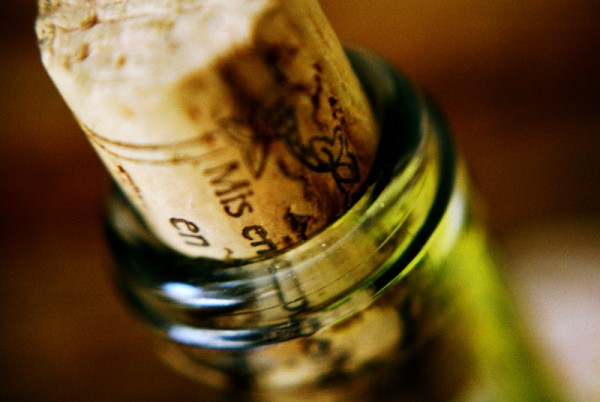
Traditional wine bottle cork packaging

Traditional wine bottle cork packaging

There’s nothing quite like the ‘pop’ of a cork exploding from a wine bottle when it’s opened is there? For me, although screw thread or rubber closures do the job, they don’t quite have the same emotional appeal. Well, for those of you who have a similar opinion (94% of wine drinkers according to a survey of 1500), you will be pleased to hear that there is research available to backup the sustainable credentials of cork and its continued use in wine bottles.

According to the Portuguese Cork Association (APCOR) there are 3 misconceptions regarding cork stoppers, that are highlighted in a recent Packaging News article:

1. Trees are NOT cut down in the production of cork – they are harvested in a sustainable manner. In fact harvesting, if managed properly, actually guarantees a trees survival.

2. Screw caps are NOT the most environmentally friendly closure, as cork is 100% natural and renewable and apparently uses 10 times less carbon dioxide (CO2) emissions than plastic stoppers and 24 times less than screw caps.

3. Corked wine is (allegedly) is NO MORE of an issue with natural cork than tainitng is with other closure systems (although this has been very carefully worded by APCOR).

You can read the full article on the Packaging News website.

You could also check out the campaign website www.ilovenaturalcork.co.uk

Chris Penfold

Have A Can Of Love

Posted in Branding, Design on July 13th, 2010 by Jane Bear – Be the first to comment

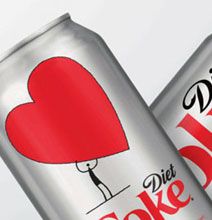
Diet Coke Love Can

Diet Coke has teamed up with the National Heart, Lung and Blood Institute to sponsor a national awareness campaign called The Heart Truth.  It’s aimed at raising the awareness of Heart Disease amongst women.  This is of course a great cause.  I’ve highlighted the pack though as I really like the design, it’s clean, simple and to the point. (Jane Bear)

To find out more about this fantastic campaign visit The Heart Truth page on the Diet Coke web site

Consumer needs for active & intelligent food packaging?

Posted in Design, Drinks Packaging, Food Packaging, Innovation, Marketing, Materials, Opinion, Retailers, Technology, Tweets, cost-optimisation on July 5th, 2010 by Chris Penfold – Be the first to comment
Apparently over 30% food produced is wasted before being eaten

Apparently over 30% of food produced is wasted before being eaten

It is interesting to read that the focus of active and intelligent (A&I) packaging has shifted from “manufacturer concerns” such as shelf-life and spoilage to “consumer concerns such as freshness, quality and information”, according to recently published research.

The report – ‘The Future of Active and Intelligent Packaging in Food and Drinks’ said that industry leaders had identified “freshness indicators as the most important innovations in the field over the next five years. A development on quality was listed as the next most important field followed by temperature and time indicators.”

However, with over 30% of all food that we buy being wasted, I would hardly call “shelf-life and spoilage” just “manufacturing concerns”. They are huge and global concerns for everyone, much of which is to do with education and the role that packaging can play to save costs for everyone in the supply chain (very important in the present economic situation) but also, ultimately, to help save the planet’s finite resources.

I’m not sure how the research was conducted, what questions were asked, or how they were asked, but apparently, consumers ranked “health, convenience, safety and enhancing product attributes” as the most important attributes that would make them willing to pay more for A&I-packaged products. “Longer shelf-life and packaging that communicates product information” were also seen as important, but consumers perhaps see these as a ‘given’ and wouldn’t necessarily want to pay extra for them.

It is my feeling that the growth of A&I packaging has been primarily technology-led, by developments in sensor technology including nanosensors and biosensors. This is highlighted by the emerging trend of the incorporation of scavenging functions into packaging with bottles, labels or films. This is great technology, but I’m not sure that most consumers would understand what these are or what benefits they bring and therefore they would certainly not want to pay for their incorporation.

It is true that “Delivery of efficiencies in the value chain and the opportunity for manufacturers to differentiate their products and boost their efficiency by reducing product losses” will be major benefits for manufacturers and retailers – but what about consumers? There is a huge consumer-led marketing ‘trick’ being missed here, especially when “High production costs, compliance with food safety regulations and consumer mistrusts” are being highlighted in the report as “potential challenges”.

So, it is good to see that the consumer perspective is taking greater prominence (to some degree at least), in the New Product developments (NPD) that will help meet consumer needs in the expanding drinks and ready-meals segments. I agree, that the current focus for A&I has to be on luxury goods initially, and that it will move to lower-end products as the technology becomes more widely available and costs fall, but maybe it’s time to take a large ’step back’, flip this around completely and look at it from a consumers’ point-of-view. It is up to us all to educate consumers – highlight the wider issues of food (and water) waste & spoilage, get them to understand the more holistic effects of these on their daily ‘wants & (real) needs’ and ultimately get their ‘buy-in’ to the ‘real’ benefits.
Chris Penfold

You can read the full article at www.foodproductiondaily.com

Many thanks to @PhilCyLaw in Brussels for bringing this to our attention via Twitter.

Tesco Hit The High Note

Posted in Cosmetics & Toiletries, Design, Drinks Packaging, Food Packaging on June 8th, 2010 by Jane Bear – Be the first to comment

No singing for your supper in this case – sounds more like it’s going to sing to you, albeit with a very limited repertoire.

Great novelty idea from Tesco. World cup sandwiches which sing ‘Ole, ole, ole’ to you. The packaging for these Jalapeno Chicken sandwiches contains the same sort of technology as singing birthday cards.

I’m sure there must be lots of other packs you could add this technology to, whether it is just for fun, or for more serious reasons. Personally I think Tesco should do cucumber and salmon sandwiches specially for Wimbledon that shout ‘that ball was in’ in a McEnroe kind of way.

Thanks to Sky News for shouting about this one, they are even showing a video of it Sky News

High street packaging dreams – end in ‘the den’

Posted in Branding, Business News, Design, Drinks Packaging, Food Packaging, Healthcare & Pharma, Marketing, Opinion, Product News, Retailers on May 19th, 2010 by Chris Penfold – 2 Comments
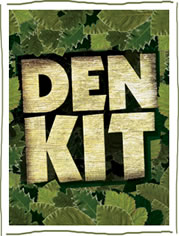
Den Kit packaging branding

Den Kit packaging branding

Monday night saw the 2nd programme in the mini series High Street Dreams (8 programmes) on BBC1. The ‘reality TV show’ about product branding, packaging & design development. Over the series Jo Malone and Nick Leslau will help a number of individuals as they try to launch new products. From a packaging and design perspective, I don’t think that this week’s show was as good & fulfilling as the first, but still entertaining. The ‘guinea pigs’ included:

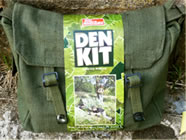
Primary school teachers from Shropshire – Jo Jones & Kay Miller who developed a ‘Den Kit’ – a fun and adventure product to help kids play & learn the old fashioned way! Good old ‘home farm’ values and fun!

Initially chopping trees down themselves in rural Shropshire to make ‘handmade’ wooden mallets, they proposed a huge retail price of  £40 per pack. However after visiting the annual Toy Fair where the average toy price was £6.70, they were forced to reconsider. Their mentor David Strang, an entrepreneur & leading toy manufacturer, emphasised the importance of  ‘eye catching’ packaging (good to hear!) which helped his own products increase sales by a factor of 25!

The ladies took this ‘on board’ and a “top graphic designer” was brought in to develop the branding, but I must say it left me disappointed. Although the typography was strong, with an ‘all over’ camouflage effect. Not sure that it had enough ’shelf stand-out, without any alluring photography or a means to view the products inside. But we didn’t have the benefit of a proper evaluation of competitor packs and ’sight’ of all packs on shelf together. Certainly if it had been our project we would have also considered other packaging options (rather than standard carton) to try and incorporate the above factors and try and add more consumer appeal, convenience & value.

The ladies did manage to get their costs down substantially by sourcing components from a brother in the Philippines. Enabling a revised price point of just under £30.

They christened their overarching brand as ‘Real Adventure’ & pitched to the MD Duncan Grant of the ‘Entertainer’ retail chain who was certainly ‘wavering’ and undecided on whether or not to stock the product. He loved the ‘down to earth’ product concept and I think that most of his concern was targeted at the packaging. He mentioned that the packaging  needed “more work” but did eventually give the ‘ go-ahead’ to try out the products in his 52 high street stores in the UK.
The revised Den Kit packaging

The revised Den Kit packaging

The kit contains: tarpaulin, groundsheet, handmade mallet, tent pegs, tent peg bag, 10m rope, metal mug, camouflage paint, webbing haversack & instructions

Since filming, Jo & Kay have certainly been busy and now have other products featured on their website which you can see here: Flibberty

You can follow them on Twitter: @DenKit

The second product featured on the programme was Nutriyum. Husband and wife, Paul and Maria Stricker quit their lucrative city jobs and invested their life savings (over £15K) to create Nutriyum – a healthy drink for young kids. Developing a drink that is both nutritious and tasty is tough enough, but they had just eight weeks to formulate a product in order to secure themselves a place on the highly competitive supermarket shelves. They enlisted the expertise of Ella’s Kitchen founder Paul Lindley and Little Dish’s Hillary Graves to help them focus, but sadly time was against them and despite bags of enthusiasm,  had failed to do their homework!!

The initial products offered by Paul & Maria were banana & strawberry flavours – but containing no fruit! The product was redeveloped within a matter of days from the previous synthetic mix into a chilled fresh fruit smoothie, which the couple were expecting to sell at the premium price of £1. Leslau affirmed the importance of pitching with a real product – NOT a prototype – something that we would strongly endorse. In our experience, retailers, buyers & marketers often find it difficult to visualise the ‘final product’, so it’s critical to get as close as possible with your product & packaging in any ’sales pitch’. Something that can be achieved quite easily these days with the ability to provide quick-turnaround physical mock-ups & realistic digitally printed artwork.

Leslau also emphasised the importance of gaining ’shelf space’ with retailers. I would also mention that stores sometimes measure profits in terms of the profit per length of shelving – which needs to be borne in mind in any pack design! Retailers need to be able to:

  • Restrict their investment to the lines that will sell
  • Buy in small quantities (keeping minimum stock)
  • Buy goods that generate the highest levels of profit

Indeed we would emphasise the importance of meeting the business needs of all supply chain parties – suppliers, manufacturers, wholesalers, retailers & customers – all are interdependent.

Manufacturing was shown in more detail this week, as the young couple hired contract filling facilities to fill prototypes – at a cost of £5000 (+£1000 for materials) – only to come to the conclusion that they had been packed in an inappropriate packaging format (an expensive mistake to make and underlines the importance of thinking these things through properly and employing ‘experts’ to help from the outset – which can actually work out more cost-effective in the long run!)

The packs chosen for filling were Guala ’style’ ‘doy’ packs, commonly used on drinks like Lucozade, but would have presented the wrong ‘messages, cues & triggers’ for the ’single shot’ proposition intended. The branding agency chosen by Malone and Leslau were ‘Identica’ who (not surprisingly) struggled to find a fit with the brand name ‘Nutriyum’ and also with the overall pack proposition (considering that the product ingredients were synthetic but supposed to be healthy and appeal to young mothers). So there was a big ‘disconnect’ there. If more market research had been undertaken by the couple before developing their product/brand a totally different & more focused offering would have been achieved.

Ultimately, Paul & Maria realised their problem and simply ran out of time, so decided themselves to ‘bow out’ – a very brave decision considering the allure of retail endorsement and the TV PR coverage they would have gained for their new brand (despite that – they certainly got some good coverage anyway!). I feel that they made the right decision and will ‘live to fight another day’, once they’ve got it right.

As it happens, I undertook some research on the web today, and it does appear that the couple have been ‘beavering away’ in the background. Although the product is “not in the shops yet”, you can find out more about their endeavours on-line (link below). As a matter of interest Nutri-Yum does already appear to been trademarked by someone else (which wasn’t mentioned in the programme by anyone!)  Paul & Maria do seem to have taken ‘on-board’ the comments made in the programme and redeveloped their branding & packaging (and no-doubt the formulation also). In fact a completely different product offering! Certainly an improvement on what was shown on the TV – but probably in need of a bit more work. The brand name has been changed to ‘nyum‘. According to Wikipedia, this means “Swallowing in Catalan” – which I suppose is reasonably appropriately. However, a quick search on Google, pulls up a huge array of ‘nyum nyum’ activity & ‘noise’ – much of which seems to relate to eating BUT none of which relates to this new brand – so I feel that more work is needed there guys! You can see the latest offering on their website www.nyum.co.uk

We wish all parties featured in the programme every success with their products, but the big learnings for anyone in their position are:

  • Include product development & design specialists from the start if you want success (we can give you a free consultation if you are unsure)!
  • Make your mistakes early on in the process, before you’ve spent too much money
  • Learn from your mistakes
  • Don’t be afraid to ‘pull the plug’ if it doesn’t feel right!

Next week the High Street Dreams team will help two sets of partners market fashion products. If you want to watch last night’s programme again you can download it on i-player here: 17th May programme

Cheers

Chris Penfold

New Design, But Why Pink?

Posted in Design on May 19th, 2010 by Jane Bear – Be the first to comment

karl_lagerfeld_coca_cola_light_bottleCarl Lagerfeld has designed a new limited edition Coco Cola Light bottle specifically for the French Market.  It’s different, has a definite presence and will no doubt become a collector’s item in its gift box with matching bottle opener but I don’t see why they have used pink? 

Coco Cola’s brand colours have always included their iconic red, so why depart from that now.  I believe the contrast caused by using the black and white design with a  red highlight would have had even more impact.  (Jane Bear)Karl-Lagerfeld-Coca-Cola-Box-Set-1

Fun With A 2D Barcode?

Posted in Drinks Packaging, Marketing on May 4th, 2010 by Jane Bear – Be the first to comment

2D barcode on HeinekenHeineken’s new summer marketing campaign will include the use of 2D barcodes.  Maybe not what 2D barcodes were intended for, but definitely a fun and engaging use for them.

The idea behind their campaign is that you text a number on the pack and they send you a link so you can download a free app which enables you to scan 2D barcodes with your phone.  You then scan the 2D barcode on the promotional packs and you’ll then be told whether you’ve won. 

Not really pushing the 2D barcode to its potential, but certainly making far more consumers aware of their existence.  According to Heineken ‘their consumers are early adopters of new technology’

I think it will be interesting to see where else the barcodes ‘pop’ up and who will be next to use them for interacting with their consumers? (Jane Bear)

To read the full article just follow this link to Mobile Marketer

What Else Could You Portion Pack?

Posted in Cosmetics & Toiletries, Food Packaging, Marketing on April 27th, 2010 by Jane Bear – Be the first to comment

McCormick & Co have come up with the idea of selling single portions of spices attached to a recipe card.  Each card contains up to 6 different spices along with a quick and easy recipe to follow.  The idea being that people will be tempted to try new spices by using the samples and then go on to buy full packs of the spices they most use and like.

It has got me thinking though, what else could you use this concept for?  Obviously sample packs have been available for years across many sectors of the market, from foods to skincare and most areas in between.  This is more structured though, more like a ‘kit’ to encourage people to try new things.

What about using the same idea to create cocktails, or how about a card/pack encouraging people to try a new cleansing routine containing shampoo, body wash and a deo.  Or what about a card containing a sample of every shower gel variant in the range?

The combinations are endless, you just need to use your imagination. (Jane Bear)

Thanks to Packaging Insight for bringing this to our attention to watch their evaluation of the pack just follow this link Packaging Insight