Uncategorized

Packaging? You’ve been framed!

Posted in Branding, Design, Environmental Issues, Events, Exhibitions, Gift Packaging, Innovation, Marketing, Opinion, Product News, Uncategorized on July 22nd, 2010 by Chris Penfold – Be the first to comment
Phlib (Monkey) Frames

Phlib (Monkey) Frames

So it’s Thursday and it’s time for us to continue our review of High Street Dreams, the BBC ‘reality TV show’ about product branding, packaging & design development and in particular look at ‘Homeware’ and Harry Singer from Somerset with his innovative wall hanging picture ‘Monkey frames’ product.

Harry is a likeable 34 yr old whose idea consists of a fantastic way to display photos using magnets and a metal frame. It was conjured up “in the pub” two yeas ago after ‘connecting’ the thoughts that it’s easy to print photos on-line these days but difficult to display them on the wall. So he made a few ‘Monkey Frames’, as he called them ( a “cheeky, hanging product”), and sold them to friends. The rest ‘is history’ as they say. Before the TV show he’d already spent £4000 developing the idea further, so he was pretty serious about it – a great product that’s really unique. Harry, quoting the likes of Google and IBM, with their straplines “organise the Worlds information” and “a computer on every desk in the home” came up with his own version “get photos on every wall in every home”.

However, after a day spent at Goldsmith’s University on ‘market research’ some interesting issues were highlighted:
1. The name ‘Monkey Frames’ didn’t particularly appeal to students.
2. The modularity (or lack of it) of the system also seemed to be an issue.
So Harry had a lot to think about. Critic Nick Leslau reiterated these concerns about the product concept (being a fixed system for 16 photos) and thought that Harry should rethink it and try to redesign it into a more flexible system. Enter designer Ben DeLeesy, famous for his ‘red carpet’ dresses, who then branched-out into interiors 10 years ago. His philosophy: “The product has to stand the test of time – you can’t just be a fleeting trend”. He now has one of the biggest ranges of ‘homeware’ on the High Street. His thoughts on how to make ‘Monkey Frames’ appeal more to the consumer were: “ingenuity, ambition, hunger & drive. If Harry gets the timing & product right, the £’s & pence will follow big time.” Easy peasy then!

The first job Ben suggested was to undertake a competitor review, looking at products like a ‘shower curtain’ (a hanging photo product). He was quick to point out to Harry, that “It’s not about your love of photos. At the end of the day, this is business!” (Wise words for any new start up entrepreneur). On the flip side, commenting on Harry’s design, he said: “I love them, but you need to break it down into different sizes, not just a ‘one- hit-wonder’. You’ve got to make it more versatile, to reach a broader base. At that point I think it dawned on Harry the amount of work that he still had to do – and in a very short space of time!

To cut a long story short, Harry went away, completely redesigned his product and in the process made it look really ‘tacky’& cheap (to get the cost down) and was pushed (by the HSD evaluating team) into deciding whether to stick with a ‘cheap-jack’ version or as Ben & the team intimated, take it back ‘upmarket’ and redevelop a ‘cheap-jack’ version later. To everyone’s relief he chose the latter – and everybody was happy.

Enter branding agency ‘Heavenly’, who rightly (in my view) affirmed that ‘Monkey Frames’ (as a  brand name doesn’t work too well). It describes the product and not the ‘lifestyle choice’ that the product could deliver. It was also polarizing (aimed at a young consumer) and not of broad appeal.
Their solution:
Brand ‘Phlib’ was unveiled – Photo Liberation – “Set your photos free” – great concept and easy to remember. I like it!

The ‘big test’ was a 1-day test that Jo Malone sorted out at the national lifestyle exhibition – The Ideal Home Show at Earl’s Court in London. The three things that they were trying to evaluate were:
1.    How you sell your product
2.    Whether you are great PR ambassadors to your product
3.    How the consumers view your product
Harry got a great response at the show, making his first sale, but when the ‘financials’ were discussed, it came to light that Harry needed to sell 10,000 units to recoup his tooling costs and 20,000 units to ‘breakeven’ – a big investment on his part and a bit of  ‘millstone round his neck’!

Anyhow, that aside, Jo and Nick put Harry through to pitch to Heals, one of the most influential homeware retailers in the UK. A 200 year old store with a turnover of £37M  and renowned for ‘breaking’ new designers. He got to pitch to Trading Director Gillian and Head of Accessories Furzana. Apparently they get to sit through 1000 pitches per year and of those, roughly 50% are successful.

Suffice it say, they liked Phlib and gave Harry an initial order of 100. Although Harry was clearly disappointed, it presented a great PR opportunity for him to ‘sell his story’ & background to ‘real customers’ and gain an awful lot of knowledge in the process. As Jo pointed out; “This is like the golden ticket’ – you have to take this opportunity and make it your own”

So what a bout the packaging? (hooray I hear you say!). ……The Heals buyers did mention the packaging at a superficial level. They liked the phrase on the promotional poster “photos belong on your wall – not on your hard drive (well done Heavenly again), but as I’ve mentioned on my other posts about this series, the packaging wasn’t entered into in any great depth. Not surprising bearing in mind the time constraints of the show. So let’s have a look at that now and think about some of the packaging issues that Harry will have either now, or potentially in the future, and try to help him pre-empt them.

As well as selling through Heals (assuming that Harry still is), he is also selling ‘on-line’ from his own website. So what sort of things should Harry consider? Let’s have a look at some of them:
Selling

Harry’s website does a great job at ‘selling’ the brand. On-line retail means the packaging does not really need to perform a selling role at Point of Sale (POS). I’m not sure if Harry is still selling at Heals and how these products are packaged to provide a consistent brand image with website and POS, but it’s something that needs to be considered carefully. I notice that Harry has already started to incorporate with his frames 3M Command™ Strips, to avoid customers having to hang or screw the frames to the wall and that’s a nice ‘added value’ touch.  Bearing in mind the flexibility of the modular system that he has developed, the packaging provides an ideal opportunity for ‘up-selling’ other frame sizes, providing ideas on wall-layout, and other photo/frame/homeware accessories.

Informing
If still selling through retailers such as Heals, Harry is probably already aware that product and bar code information will be required. This may not necessarily be so for Harry’s own website initially, but as his business grows, this type of information will greatly aid stock control. For consumers, useful information could include, at a basic level – frame size, colour, price, contact details but at a more emotional and engaging level, provides an opportunity for Harry to ‘connect’ with his target market. He could provide all sorts of information on the brand heritage, his vision for the business, brand values, the methods he uses to make his frames, the quality of materials & methods used and really build an emotional story on which to ‘pivot’ the brand.
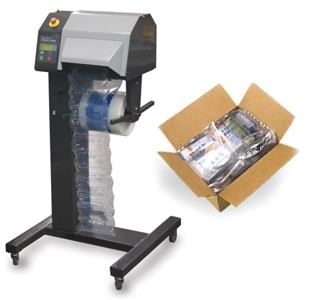
Sealed air transit packaging & inflating machine

Sealed air transit packaging & inflating machine

Transporting
From Harry’s online store, I should imagine that most of his transport needs are met by a courier such as DHL or other. I’m not sure what sort of stock-holding Heals will want to keep, but it’s certain that they will want to manage & move their stock in the most efficient way possible. To enable this, as well as relevant information, they will want frames boxed into suitable multiples (6, 10, 12 or whatever). The shipping boxes used will require their own ITF bar codes to enable ease of handling & storage.

Protecting
At least Phlib products are not frames that incorporate glass into their manufacture. This makes them lighter and less likely to get damaged in transit than the ‘glass variety’, although being thin metal, they are liable to get bent. Careful use of traditional ‘padding’ materials like corrugated board and bubble-wrap can provide a simple enough ‘filler’ to protect the product from crushing, but there are a number of alternative organic, compostable and ‘sealed air’ filler materials around
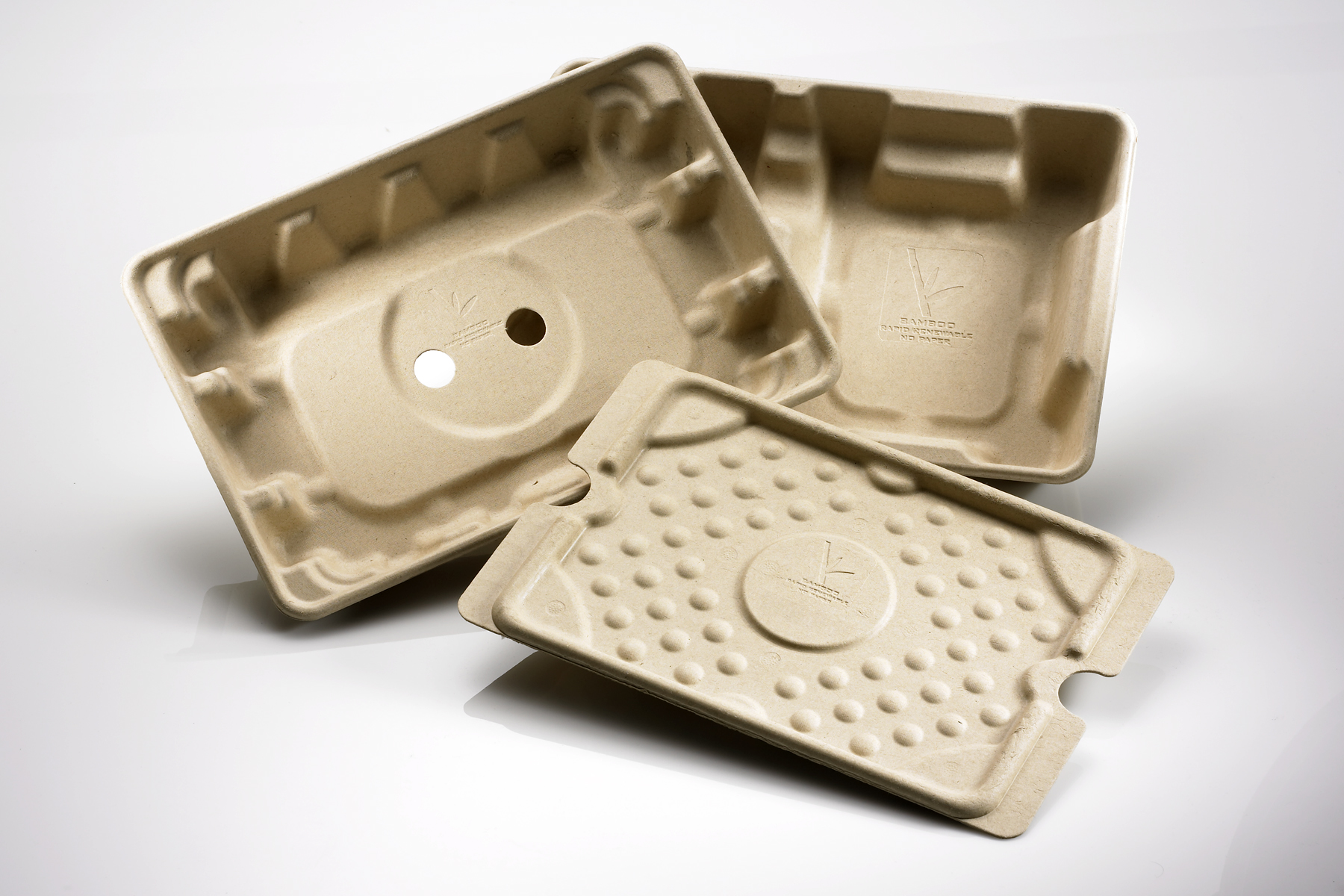
Bamboo transit packaging trays

Bamboo transit packaging trays

now that can also provide a more ‘environmentally friendly’ transit packaging solution. If you want an interesting insight into the perils of picture frame packaging issues and remedies, check out this interesting article on the topic on the Datalite website.

I hope that this has highlighted SOME of the packaging considerations that need to be taken into account when developing and selling a product like picture frames and supplying them to market. I’m not sure how many of these issues were discussed ‘off camera’ during the programme, but they all play their role in a successful launch, and ‘branding’ is only a part of the picture. So well done Harry, for getting this far, and we wish you every success in the future.

You can find out more about Harry’s products from his Phlib website.

Tomorrow is the last installment of our High Street Dreams reviews. I will take a look at the final product covered in the last TV programme and, as well a giving an overview of what happened in that show and how packaging and design aspects were tackled as above, I’ll also take a ‘step-back’ and provide my own thoughts on some of the other important issues that entrepreneur (Bex) needs to consider (or should have considered already) in the successful launch of her products to a mass market! So keep your eyes open for the following posting on this site:

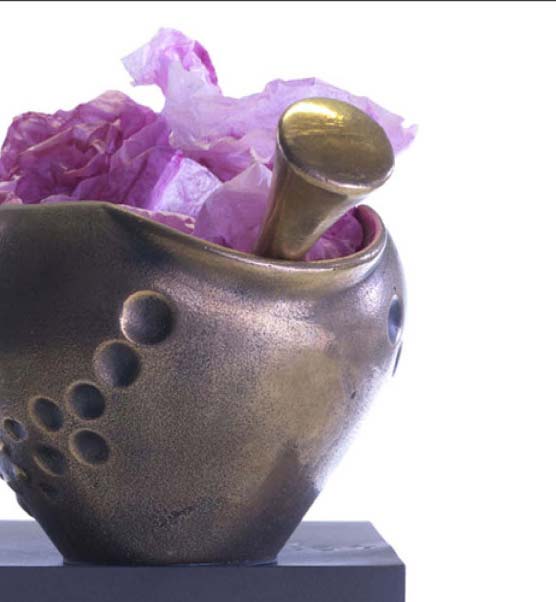
Friday 23rd July: ‘Homeware’Bex Simon an artistic blacksmith who designs beautiful one-off metal-ware objects for the home.

Chris Penfold

Claire’s very English Jewellery packaging

Posted in Branding, Design, Events, Gift Packaging, Marketing, Opinion, Retailers, Uncategorized on July 21st, 2010 by Chris Penfold – Be the first to comment
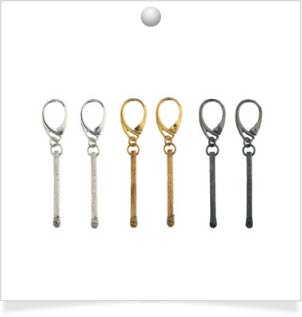
Claire's unique matchstick earrings

Claire's unique matchstick earrings

This article is a follow-on from the two that I wrote yesterday and Monday, which provided an overview on the packaging design aspects encountered in the recent mini series High Street Dreams on BBC1; The ‘reality TV show’ about product branding, packaging & design development. Over the series Jo Malone and Nick Leslau helped a number of individuals to launch new products.

Today we focus on Programme 3: ‘Fashion accessories’ striving to be the next fashion brand and in particular on Claire English, a contemporary jewellery designer from Lewes, East Sussex, making distinctive and eclectic homemade jewellery.

Help and advice was provided to Claire on the show in the form of Stephen Webster, a jeweller to ‘the Stars’, including Christine Aguellera, Kate moss and Cheryl Cole. He emphasised that, as a newcomer, Claire must “earn every inch”, “convey her story” and “focus” her collection. He thought that she needed a ‘hero’ (star) piece, to ‘draw the eye’ in the ‘polished’ environment of a designer shop to hold potential customer interest.

Claire did subsequently amend her product range and decided to be ‘the face & name’ of her own brand. During ‘market research pitches’ in a real retail environment, although her creative skills were without question, doubts about her commercial ability to run a business were raised. However, the team decided to let her pitch to Selfridges, the ‘flagship store’ in Oxford St, London, to Anne Pitcher the Buying and Merchandising Director. Claire’s packaging provided a “Beautiful presentation” with pretty bows and ribbons and cut with scissors – a nice touch! At £2 each, the boxes weren’t cheap (especially for a small business when the minimum order quantity is 1000), but they ‘did the trick’.

Some of Claire’s jewellery, made from unorthodox items such as ‘bubble blowers (see picture above) and matchsticks were seen as ‘very English’, with good ’stand-out’ in media such as magazines that would “give the ‘press’ something to talk about”. Indeed Claire was commended by Anne: “Congratulations – Quite extraordinary – You have thought about PR and POS material”. Although she was warned to “think about the competition”, which is something that is often a good starting point for us at Design Cognition when thinking about designing any new packaging. Not that we would necessarily follow the ‘norms’ of a particular sector, but at least it can provide a useful ‘benchmark’.

Ultimately although Selfridges liked Claire’s work very much, saying that it was” quite special”, they did not place an order on the day, because the jewellery was only at prototype stage. They wanted to wait until they had seen a ‘production sample’. Seeing as Claire’s work is now listed on her website as “available online from Selfridges”, we are assuming that she was finally successful, although there only appears to be one product on-show. A good starting point, but to develop a thriving business Claire will evidently need to ‘roll this out’ further at Selfridges and also through other channels. The on-line shop on Claire’s own website appears to be “coming soon”, which is a shame because she’s probably missing out on a lot of the good PR from the TV show, which could have given her a good kick start with her fledgling business.

Granted, that packaging is not the main selling point for a Claire’s jewellery – especially if it’s going to be sold on-line. However most of the items will be bought as gifts, and for a price of around £100 per item, customers will expect some nice packaging as part of the price.

As mentioned in my previous postings, when developing effective packaging, a unique set of circumstances needs to be considered, depending on the product itself, the route to market (whole supply chain) and consumer needs involved. Packaging performs a number of varied and important roles; containing, protecting. preserving, transporting, informing & selling and has to meet a number of important stakeholder needs at all stages of the supply chain, from manufacturing & filling, through warehousing & transportation, retail and consumer-use to final disposal or reuse.

Purchasing ‘fashion accessories’ like jewellery is a much more ‘tactile shopping experience’ than for other products like foods. As Claire seems to be concentrating sales presently through an on-line route, perhaps this is not so much of an issue, but as the brand and sales channels develop into more ‘customer facing’ ones, needs will evolve.
Claire showed on the programme that she has ‘an eye’ for some innovative gift packaging ideas with her bows & ribbons and this is a good start. This will enhance perceived ‘value’ and if developed to mirror her other branding will reinforce the brand credentials.

So what sort of things should Claire consider? Let’s have a look at them one at a time:

Daisy Chain jewellery packaging

Selling
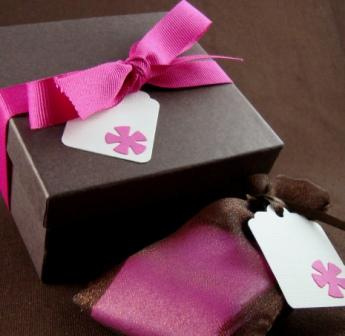
On-line retail means the packaging does not really need to perform a selling role at Point of Sale (POS). However, the benefits of ‘added value’ gift packaging have already been mentioned and this can help promote referrals from clients, friends and relatives. If done properly and using stylish ‘must have’ packaging that could also act as a funky jewellery box, with subtle use of branding, the packaging will perform a permanent sales role on the dressing table. It may also help promote ‘up-selling’ to other pieces of Claire’s jewellery & trinkets. All merchandising; packaging, brochures, website design etc  – all need to work together to provide a consistent message and brand image. Take a look at the Daisy Chain packaging in the photo that is something that someone would want to keep and cherish.
Informing
If selling through retailers such as Selfridges, product and bar code information will be required. This may not necessarily be so for Claire’s own website initially, but as her business grows, this type of information will greatly aid her stock control. For consumers, useful information could include, at a basic level – jewellery name, collection name, materials, colour, price, contact details but at a more emotional and engaging level, provides an opportunity for Claire to ‘connect’ with her target market. She could’ like Beryl in yesterdays article, provide all sorts of information on the brand heritage, her vision for the business, brand values, the methods she uses to make the jewellery, the quality of materials & methods used and really build an emotional story on which to ‘pivot’ the brand.
Transporting
From Claire’s online store, I should imagine that most of her transport needs are met by DHL or some other courier. I’m not sure what sort of stock-holding Selfridges will want to keep (if any), but it’s certain that they will want to manage & move their stock in the most efficient way possible. To enable this, as well as relevant information, they will want jewellery boxed into suitable multiples (6, 10, 12 or whatever). The shipping boxes used will require their own ITF bar codes to enable ease of handling & storage.
Protecting
Jewellery manufactured from ‘hardy’ metallic materials but can be very delicate at the same time. Careful use of traditional ‘padding’ materials like coloured tissue paper can provide a simple enough ‘filler’ to protect the product from scratching and crushing, but at the same time can also provide a lovely ‘backdrop’ to accentuate and contrast the glistening colours of the metalwork. As well as product, any lovely gift boxes will need to be protected in some suitable transit packaging if being sent vie courier; it is not uncommon for packets to be used as ‘footballs by postal workers.

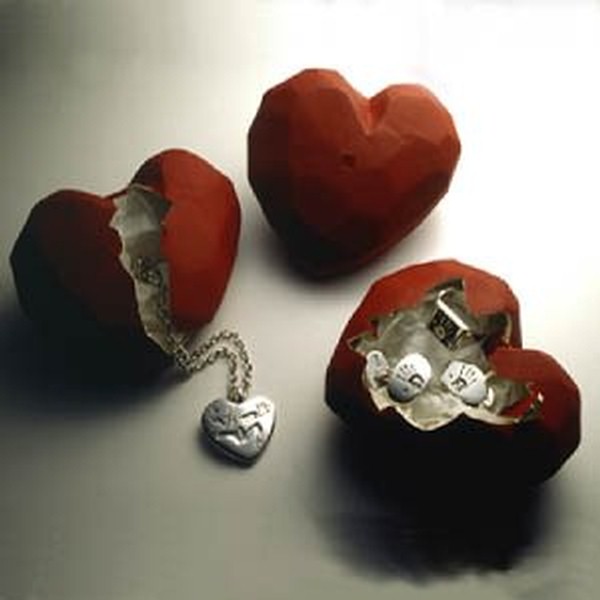
Heartbreak packaging - a novel approach to containment

Heartbreak packaging - a novel approach to containment

Containing
Containment is usually more of an issue for products like liquids and powders, which can spill or leak, rather than jewellery. Although Claire is presently selling on-line, as she builds a portfolio of products being sold in retail stores, she might want to consider how consumers will ‘contain’ their jewellery and gift boxes during the trip from shop to home. As with Beryl, this is another ideal opportunity for her to provide some ‘added value’ packaging, such as high quality branded shopping bags or boxes that will raise brand awareness and ‘perceived brand value’ with consumers and act as a ‘walking’ advert through the shopping streets of our towns & cities. Take a look at the novel Stephen Einhorn ‘Heartbreak’ packaging, which provides a great ‘twist’ on containment, with all sorts of subliminal messaging that will help engage potential customers.

I hope that this has highlighted SOME of the packaging considerations that need to be taken into account when developing a product like jewellery and supplying it to market. I’m not sure how many of these issues were discussed ‘off camera’ during the programme, but they all play their role in a successful launch, and ‘branding’ is only part of the picture. So well done Claire and we wish you every success in the future.

You can find out more about Claire’s products from her Claire English Special Jewellery website.

Over the next 2 days, I’ll take a look at the other 2 products covered in the last TV programme and, as well a giving an overview of what happened in those shows and how packaging and design aspects were tackled as above, I’ll also take a ‘step-back’ and provide my own thoughts on some of the other important issues that those entrepreneurs need to consider (or should have considered already) in the successful launch of their products to a mass market! So keep your eyes open for the following postings on this site:

Thursday 22nd July: ‘Homeware’ – Harry Singer from Somerset with his innovative wall hanging picture ‘Monkey frames’ ( Phlib) product.

Friday 23rd July: ‘Homeware’ – Bex Simon an artistic blacksmith who designs beautiful one-off metal-ware objects for the home.
Chris Penfold

Day12 – ALL Packaging Top 10 Tips in 1 x video

Posted in Design, Opinion, Top 10 Tips, Uncategorized on March 19th, 2010 by Chris Penfold – 1 Comment
Packaging Top Ten Tips

Packaging Top Ten Tips

In order to help you develop your packaging more productively, we have generated a series of  FREE short 1-2 minute videos detailing our Tip Ten Tips for getting it right. We have been posting 1 x video per day over the past 11 days on this blog site -and hope that you have found them useful – remember they could save you a £££$$$ fortune in the long run!

As an added benefit, we thought that it might be useful to collate all of the Top 1o packaging Tips into 1 x 10 minute video for you. So here it is………..

Have fun packaging.

Cheers Chris

Today’s video – ALL of the 10 Tips in 1 x video::

Packaging Top Tips – The whole Series of 10 tips in 1 x video v2 – by Chris Penfold – Design Cognition

We hoped that you’ve enjoyed watching them as much as we’ve enjoyed making them. We’re passionate about packaging, so watch out for more to follow in future…if you’ve got any ideas on what you’d like to see covered – drop us a line…

Day11 – Packaging Top Tips – Summary & conclusions

Posted in Design, Opinion, Top 10 Tips, Uncategorized on March 18th, 2010 by Chris Penfold – Be the first to comment
Packaging Top Ten Tips

Packaging Top Ten Tips

In order to help you develop your packaging more productively, we have generated a series of  FREE short 1-2 minute videos detailing our Tip Ten Tips for getting it right. We have been posting 1 x video per day over the past 10 days on this blog site and hope that you have found them useful – remember they could save you a £££$$$ fortune in the long run!

Today’s video: Pulls all of my Tips together and offers some final thoughts on how to develop packaging that is ‘right first time’, on-time & within budget. Watch the video to find out more…………..

Have fun packaging.

Cheers Chris

Today’s Video: DAY 11 – A summary & some final thoughts:

Packaging Top Tips -  Summary & conclusions – by Chris Penfold – Design Cognition

As an added benefit, we thought that it might be useful to collate all of the Top 1o packaging Tips into 1 x 10 minute video for you. So we’ve done that and will be posting here within the next 24 hours – so look out for it…………..

DAY 10 – Packaging Tip No10 – IP protection?

Posted in Design, Innovation, Legal, Opinion, Technology, Top 10 Tips, Uncategorized on March 17th, 2010 by Chris Penfold – Be the first to comment
Packaging Top Ten Tips

Packaging Top Ten Tips

In order to help you develop your packaging more productively, we have generated a series of  FREE short 1-2 minute videos detailing our Tip Ten Tips for getting it right. We will be posting 1 x video per day on this blog site over a 10 day period – so keep a look out for them – they could save you a £££$$$ fortune in the long run!

DAY 10 – Tip No 10: There are many types of protection that you can implement to help protect your pack style, shape,colours, branding , logos or layout…but what’s the best approach? Watch the video to find out….

Have fun packaging. Cheers Chris

Today’s Video:

Packaging Tip No 10 – IP protection – by Chris Penfold – Design Cognition

Look out tomorrow for the final part in our series – a conclusion & a chance to download ALL 10 Tips in 1 x 10 minute video…..

DAY 9 – Packaging Tip No9 – Cost minimisation

Posted in Design, Innovation, Materials, Opinion, Top 10 Tips, Training, Uncategorized, cost-optimisation on March 16th, 2010 by Chris Penfold – Be the first to comment
Packaging Top Ten Tips

Packaging Top Ten Tips

In order to help you develop your packaging more productively, we have generated a series of  FREE short 1-2 minute videos detailing our Tip Ten Tips for getting it right. We will be posting 1 x video per day on this blog site over a 10 day period – so keep a look out for them – they could save you a £££$$$ fortune in the long run!

DAY 9 – Tip No9: Everyone’s aim is to develop a pack that is ‘fit for purpose’ but at minimum cost. There are a number of approaches that you can take and each will have a significant impact on the final outcome. What might seem the cheapest solution initially, might cost you dearly in the long run! Watch the video to find out more….

Smiley smiley packaging. Cheers Chris

Today’s Video:

Packaging Tip No9 – Cost minimisation – by Chris Penfold – Design Cognition

Look out tomorrow for Tip No 10 – IP protection…..

DAY 8 – Packaging Tip No8 – Information & communication

Posted in Branding, Design, Legal, Opinion, Safety, Top 10 Tips, Uncategorized on March 15th, 2010 by Chris Penfold – Be the first to comment
Packaging Top Ten Tips

Packaging Top Ten Tips

In order to help you develop your packaging more productively, we have generated a series of  FREE short 1-2 minute videos detailing our Tip Ten Tips for getting it right. We will be posting 1 x video per day on this blog site over a 10 day period – so keep a look out for them – they could save you a £££$$$ fortune in the long run!

DAY 8 – Tip No8: I don’t need to tell you how important branding is on a pack, do I?. Get it wrong and you’ve got a ‘dead duck’ on your hands! But wording on packs performs many functions. There are many legal requirements & you must be able to substantiate any claim you make. Aesthetically the wording & graphics must work in harmony. Incorrect wording is the most common reason for product recalls, which can cost a producer many £000’s. Find out more on the video….

Have fun packaging. Cheers Chris

Today’s Video:

Packaging Tip No8 – Information & communication – by Chris Penfold – Design Cognition

Look out tomorrow for Tip No 9 – Cost minimisation…..

DAY 7 – Packaging Tip No7 – Physical protection?

Posted in Design, Healthcare & Pharma, Materials, Opinion, Safety, Top 10 Tips, Uncategorized on March 12th, 2010 by Chris Penfold – Be the first to comment
Packaging Top Ten Tips

Packaging Top Ten Tips

In order to help you develop your packaging more productively, we have generated a series of  FREE short 1-2 minute videos detailing our Tip Ten Tips for getting it right. We will be posting 1 x video per day on this blog site over a 10 day period – so keep a look out for them – they could save you a £££$$$ fortune in the long run!

DAY 7 – Tip No7: In a previous video we looked at external damage to your packaging & how transit packaging can help, but what about protection from the product within? Is your product formulation particularly aggressive? Could it attack the packaging from the inside? Sound implausible? You might be surprised! Check out this video…..

Tip Top packaging! Cheers Chris

Today’s Video:

Packaging Tip No7 – Physical protection? – by Chris Penfold – Design Cognition

Look out on Monday for Tip No 8 – Information & communication…..

Pharmaceutical packaging – celebration of success – foundation for the future

Posted in Associations, Design, Government, Healthcare & Pharma, Legal, Machinery, Materials, Opinion, Safety, Uncategorized, cost-optimisation on March 11th, 2010 by Chris Penfold – Be the first to comment
Blister Packaging

Blister Packaging

The following article is one that I’ve recently written for the Packaging Professional magazine, which details a fascinating 25 year transformation in the way we work and do business in the pharmaceutical packaging industry. Over that period the industry itself has undergone huge change and with recent economic pressures and the rise of generic competition is likely to continue unabated.

Back in the 1980’s, before the days of email and the internet, working in packaging could sometimes be a lonely business, especially in an area like pharmaceuticals where regulatory requirements, standards and process were constantly being updated as authorities, such as the US Food and Drug Administration (FDA) and the UK Medicines Control Agency (MCA), evolved  increasing powers and rules. A situation where ‘fit for purpose’ packaging could be a matter of life and death.

Pharma companies are strictly regulated and need to work to tight and common standards and most companies were running similar, machinery, quality systems and packaging materials. So learnings from one company could greatly help another and save having to ‘reinvent the wheel’. It was also important for the industry to provide a collective view to positively influence proposed legislation and regulations, with a common and pragmatic ‘voice’.

So back in 1984, the ‘seed’ of an idea for a group was ‘sown’ by Alan Haskins of Roussel Laboratories and Roy Gray of ICI Pharmaceuticals, after Roy’s boss had visited the USA and seen a successful American group working in the same sector. This was a defining moment and the group would not have happened without their collective vision and proactive approach. The first Pharmaceutical Common Interest Group (PCIG) meeting took place on 16th October 1984 at Sysonby Lodge, which was the head office of The Institute of Packaging (IOP) at the time). The meeting was chaired by Alan Haskins, with Roy Gray as Secretary and an attendance of 18 people from 15 pharmaceutical companies from across the industry. There were 37 questions raised & discussed at that meeting on a range of topics, including: a New British Standard for aluminium flexible tubes, label adhesives, Tamper Evidence and EAN bar codes – themes that would arise again and again over the years.

It was agreed that there would be three meetings per year and venues would rotate across the various company sites, but over the years most were actually hosted by the IOP.

One of the original members, Mike Shorten, who worked for Boots Pharmaceuticals at the time and is now retired, recalls:

“The PCIG soon became my most important network. Forty pharmaceutical practitioners across all sectors of the industry provided a powerful resource that could offer practical experience about most issues and without any consultants’ fees! A great strength of the group was the willingness of its members to talk openly about issues and share best practice and then to collectively influence new regulations and standards”

How the CIG has changed over the years

I have myself have been a member of the group for over 18 years (since 1991) and over that time can recall a great deal of camaraderie, focused help for each other and pragmatism having helped us all deal with issues as diverse as use of high barrier blister materials, bar coding issues and leeching of preservative through polyethylene bottles.

As issues became apparent, some common themes evolved and a number of dedicated ‘sub groups’ were set up to focus on specific topics. Four of these were Working Groups for Digital Artwork & Reprographics (DAR), Validation, Child Resistance and Quality Standards. The DAR subgroup was set up at a time when ‘desktop publishing’ was a buzz word being used as artwork generation moved from ‘old fashioned’ layout board, to a digitised computerised system.  At the time there was no common standard. There was a range of hardware (PC & Mac based), a number of operating systems, and various artwork creative software packages on each platform. The ease by which artwork could be generated and manipulated raised its own issues in terms of artwork version control and (in the early days) data going ‘missing’ sometimes between approval and print – which had the potential to cause a catastrophic result. So the group played a critical role in sharing ‘best practice’ and setting appropriate standards.

The Validation subgroup was formed in 1992, the founding Chairman being Mike Harwood of The Wellcome Foundation, Dartford. A subsequent Chairman (1993-98) John Cooper (of Pfizer at the time) recalls “The original intent was to develop a set of guidelines for validating pharmaceutical packaging equipment and then issue to IOP members, but as the guideline developed and the information was shared informally with machine manufacturers it became obvious that it would be of a wider benefit to publish a ‘book’. As I was a member both of the PCIG and Institute of Quality Assurance Pharma Quality Group (IQA PQG), I suggested that this was published jointly as a monograph in the series which was already established by the PQG. The monograph was published in 1998 and launched at a joint meeting of PCIG and PQG at the Royal Pharmaceutical Society in Lambeth with over 200 people in attendance, including the MCA Head of Inspection and Enforcement, Gordon Munro!” That was another defining moment in the ‘life’ of the PCIG and evidence of the esteem with which the group was held within the pharmaceutical industry. The third edition of that monograph is presently due for print.

It was not uncommon in the early days for PCIG meeting attendance to be around 35-40 people, with standing room only. Questions would be collated by the Secretary and shared at each meeting. It would sometimes take 3 or 4 hours to go through them all, one-by-one. As the years have gone by and we have moved in to a digital age, email has enabled members to converse more easily and questions can be asked and answered sometimes within minutes. So the focus and frequency of face-to-face meetings changed to providing more of an opportunity for discussing in more depth, processes, procedures, technology and impending legislation, and to keep in touch with old colleagues and friends. Together with the myriad of mergers among the pharma companies, this has meant attendances have dropped.

Where we are going with it in future
The PCIG (now called the Pharmaceutical Packaging Forum – PPF) is still active, with a core of ‘stalwart’ members and a new voluntary Secretary, David Pethick, former Director of Packaging Development at GSK. David is upbeat about future for the group and says “the pharma landscape, increasing demands and changing regulations on packaging present as much, if not more of, a challenge as when the PCIG was first established. I see both a need and role for a vibrant PCIG to help the pharma packaging professional meet those challenges, whether that be from simply providing networking among its members, to wider influencing, technical leadership, training needs or whatever”.

Pharma packaging legislation/regulation has changed enormously, and the Society recently received an enquiry about training courses on this. Feedback from PCIG members showed a high level of similar interest. Whether or not such a course could be developed is still a work in progress, but both David (for PPF) and Ian Morris, Training Manager at IOM3, would be interested in readers’ feedback.

Ultimately, the future and utility of PCIG, as over its past history, is reliant on the members who actively value and contribute to it.

Chris Penfold

If you work in Pharma and are interested in knowing more or in joining the PPF group, you can contact David Pethick (the Secretary) at dppk@btinternet .

On my own part (Chris), as well as continuing to be an active member of the PPF and a consultant, I am also the External Relations Officer of the East Midlands Packaging Society, for which you can find more information at: East Midlands Packaging Society.

You can find more help and advice on various aspects of pharmaceutical packaging at our sister site: The Pharma Gateway

DAY 6 – Packaging Tip No6 – Environment & sustainability

Posted in Design, Environmental Issues, Opinion, Recycling, Top 10 Tips, Uncategorized on March 11th, 2010 by Chris Penfold – Be the first to comment
Packaging Top Ten Tips

Packaging Top Ten Tips

In order to help you develop your packaging more productively, we have generated a series of  FREE short 1-2 minute videos detailing our Tip Ten Tips for getting it right. We will be posting 1 x video per day on this blog site over a 10 day period – so keep a look out for them – they could save you a £££$$$ fortune in the long run!

DAY 6 – Tip No6: These days the environment is top of everybody’s mind. But, did you know, there is lots of legislation to which you must comply? Also, as new materials continually come on to the market it’s difficult to keep up with it all…find out more in the video…

Enjoy your packaging. Cheers Chris

Today’s Video:

Packaging Tip No6 – Environment & sustainability – by Chris Penfold – Design Cognition

Look out tomorrow for Tip No 7 – Physical protection?…..